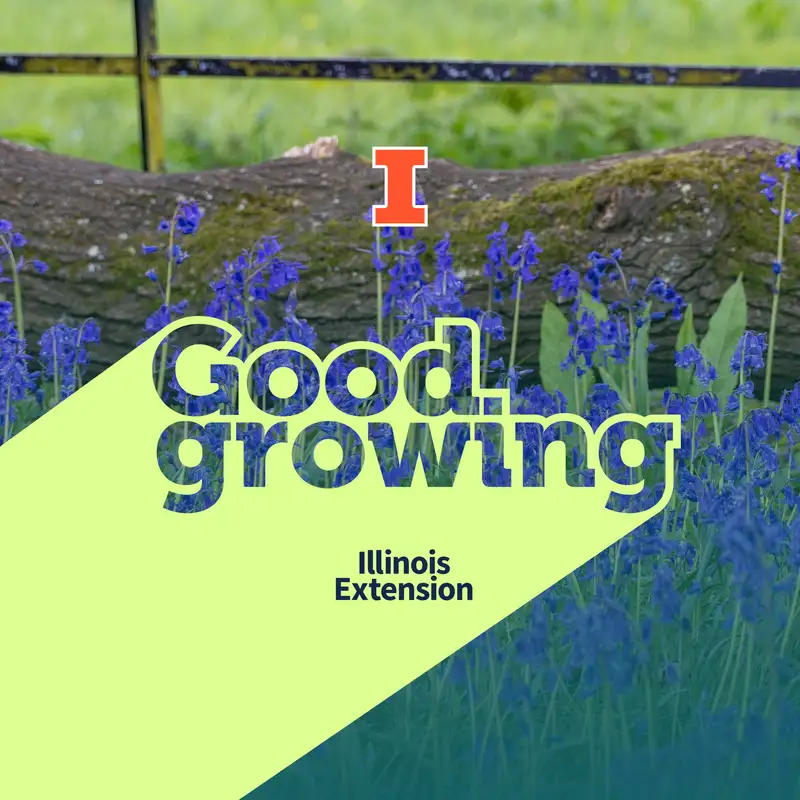
Ep. 266 Lesser-Known Minor Bulbs That Shine in Spring | #GoodGrowing
Welcome to the Good Growing podcast. I am Chris Enroth, horticulture educator with University of Illinois Extension coming at you from Macomb, Illinois, and we have got a great show for you today. We're gonna be talking about, so, the minor bulbs, not the major bulbs, the minor bulbs. No. We're not talking music.
Chris:We're talking plants today. And I'm excited to this. We're gonna be talking with doctor Ann Shannon of the Ohio State University, my favorite university to say the name of. But you know I'm not gonna be doing this by myself. I'm joined as always every single week by horticulture educator Ken Johnson in Jacksonville.
Chris:Hey, Ken.
Ken:Hello, Chris. How are you?
Chris:I'm fine, Ken. I am doing just dandy. How about yourself?
Ken:Not bad. Another day in paradise.
Chris:Every day in Central Illinois is a day in paradise, isn't it?
Ken:As long as it's not hot and humid. Yes.
Chris:Well, that's most of the summer so far. So we're we're striking out. But everything's drying down. Relative humidity is going down. We're not breathing corn sweat constantly, so that's not not as bad.
Chris:Right?
Ken:Just corn dust now.
Chris:Yep. I'll be blowing my nose here in just not too long. And we are also joined as always every single week by horticulture educator Emily Swihart in Milan, Illinois. Emily, welcome back.
Emily:Hi, guys. Yeah. Good to see you. I I feel the ragweed issues. I might I'll be sniffling and maybe have to mute myself to cough a little bit because that ragweed's hitting me hard.
Emily:We talked about that last week. And it's not the goldenrod, I'm not angry at the goldenrod, but the ragweed is affecting our family. Yeah, it falls upon us. And I'm excited to have our guests with us today. I love when winter ends.
Emily:Ken, you know this. And we get to look forward to the springtime. And there's no sure sign to me, at least, of spring than bulbs, which is why we're talking about them in August or September. What month is it? September?
Emily:Planning ahead.
Chris:That's right. When the color returns to the landscape, it's always a welcome sight to see in the springtime. Well, I think without further ado, we should invite our special guest to the show, Doctor. Ann Shannon with The Ohio State University. So welcome to the show, Ann.
Chris:We're happy to have you here.
Ann:Thank you. I'm so happy to be with all of you today.
Chris:Excellent. We are happy to have you. So you are an agricultural and natural resources as a specialist. I can't read my own writing here.
Ann:I'm an extension educator. So I work with our county residents, both, with consumer horticulture and then more broadly with commercial horticulture throughout Northeastern Ohio. So I'm in, Ohio. So if you know Ohio, I'm about an hour East of Cleveland right up along the lake.
Chris:Excellent. Well, cool. Very neat. Well, we're we're doing something a little bit different. Often, we've been very Illinois centric.
Chris:But, you know, we we we went to this conference in Denver. We met so many wonderful colleagues from around the country, and we thought, well, what if we went on a trip? Well, virtually, but a trip where we can go and we can visit all the states. And so I don't think we're gonna do this in like a one shot a year, maybe not even two years, but we're gonna try to visit as many states as we can virtually and talk with extension folks like yourself, Anne. So we're happy to you're our first person on this extravaganza that we're planning.
Chris:So we're happy to have you here as our first one.
Ann:Well, having spent a lovely year of my life in West Chicago, Illinois, I have very fond memories of the Illinois State. And what we're gonna talk about today is something that anybody throughout the Midwest can plant, whether we're talking Ohio, Michigan, Indiana, Illinois, Pennsylvania, throughout the Midwest. So
Chris:well, very good. Well, Emily, if you wouldn't mind getting us started on the line of questions, please.
Emily:Oh, I would love to. And and you that was a great setup, Ian, so that we can can just dive in here. But so we're gonna be talking about minor bulbs, but I think we should maybe define what they are. Can you help everybody and our listeners and viewers understand what do we mean when we say a minor bulb as compared to one of the major bulbs? Absolutely.
Emily:And why don't we know about them maybe as well as some of the more major bulbs?
Ann:So minor bulbs actually get their designation for two reasons. One, they tend to be somewhat more diminutive, so usually less than a foot in height. But they're also just much less well known. When we shop for bulbs, it's always the daffodils and the tulips and sometimes the hyacinths that get the top billing. And these bulbs tend to be on maybe lower shelves.
Ann:Maybe you have to look just a little bit harder for them. But many of these are very early to bloom and some of them have absolutely exquisite colors.
Emily:Yeah. Do you think, are they all pretty well available? The ones that we're going to be talking about today, you said that sometimes you have to hunt for them a little bit more in our garden centers. But do you think that I guess, would you would you designate ones maybe as we go along if they're going to be ones we would have to mail order?
Ann:All of them that we're going to talk about today should be available at a garden center. In fact, many of the large, home centers are gonna have most of these. If you want some really high quality bulbs, if you want some of the special cultivars there, you may actually have to go to a mail order source for them.
Emily:Before I hand it over to Ken to talk more specifically about the species, just out of the gate, do you have a favorite of these?
Ann:Probably it's a toss-up between snowdrops, which are the very first bulb to come up. In fact, even before the crocuses come up, and they're beautiful little white, flowers with green dots on them. And I always love a vibrant blue, and so that would be the Siberian squill that I think are absolutely lovely.
Ken:All right. So you mentioned a couple of species there. So I guess of these kind of minor bulbs, which would be the easiest to grow? So if you're just starting with this, what would be ones you want to kind of start off with?
Ann:Snowdrops certainly are exceedingly easy to grow. They're going to be ones that will take some shade so you can actually plant them underneath trees or underneath shrubs to kind of give you that initial drift of color in spring. The Siberian squill and then also the glory of the snow which is another very nice little star shaped flower comes in either pink with white on the petals or blue with white on the petals. These actually grow great in rock gardens. You can use them definitely along the edges of driveways.
Ann:So lots of good places to use them.
Ken:All right. So these are minor because they're smaller, they're not used very much. Are there, I guess, bulbs like some of the lesser known minor bulbs that maybe deserve a little more attention than they get?
Ann:Glory of the Snow is probably one of all of these that's least known but one that truly has potential in the landscape. Something else that also is not very well known are summer snowflakes, not to be confused with snowdrops, and they actually bloom a little bit later, so they're going to be sort of an early to mid season bloom and very bell shaped flowers, and they actually pair very nicely with things like forget me nots.
Ken:Are there any so native plants have been they're kind of the flavor of the month for the last several years. Are there any of these minor bulbs that would be native to the Midwest?
Ann:So the only bulb in this group that really is native and it's actually native more to the Western United States is Kasmasia, which is a hard name to pronounce and unfortunately does not have a good English equivalent, but that is actually one that blooms later, so it's actually going to be an end of the bulb season, so it's going to be blooming generally into May, but it has beautiful star shaped flowers and panicles of 20 to 50 flowers, so fairly intense. Blooms after the daffodils becomes an ice blue. And so for all those folks that are like me that like things that are blue in color, that one is one of our natives or at least native to the native to North America.
Chris:You had and you had mentioned, I guess, these as, like, diminutive, like smaller. But then also the colors you're describing are like they sound pretty spectacular. So I'm trying to think about if we have these little plants, how would you suggest gardeners use these to make a big impact in their landscape?
Ann:To make the impact, what you have to have is use a fair number of bulbs to the square foot. So we're really talking typically either nine up to 16 bulbs to the square foot. So they're planted fairly close together, and we want to plant them in drifts. And one of the ways I help folks to think about it is if you're thinking about putting an edge along something or drift along something, actually going with flour, laying it out, getting that curve just the way you want and then going back, laying your bulbs out and then planting them typically about three inches apart and at least with the snowdrops, the squill and the glory of the snow about three and a half to four inches down. So you don't want to plant them too deep because these are fairly small bulbs, but you want to make sure that they're deep enough not to not to go through the heaving that we all get with the winter freeze and thaw cycles that we experience here in the Midwest.
Chris:I see a lot of, actually, I'm thinking of one property in particular. I I remember even as a kid, we would drive by it. It was an older farmhouse, which was now in town, but they had the old trees there. You know? So there was pretty good shade, probably a lot of root competition, but then there were parts of it that were, like, full sun.
Chris:So do would these, like would these species, would they perform well in in either shade or sun? Do you have any suggestions about, like, location and sighting?
Ann:So these really all need part sun to full sun. So we're talking somewhere in the neighborhood of four to maybe six hours of sun plus a day. Because they come up so early in spring, often before our deciduous plants are out, they're going to get that sun that they need. And then as we move into the full summer, as that foliage is dying back, they're still going to be getting sufficient light to replenish those bulbs for the following year. They they all of these naturalize very well.
Chris:Okay. And like soil moisture, do we have to make sure it's like good, well draining soil? Because I've you say bulbs and I'm like, I I wonder. We need some good, sharply drained soil for these guys.
Ann:Certainly, we don't want a wet soil. We don't want, root rot. So the same things that will affect actually our onions and and other bulbs that we're familiar with will affect these, so we want to make sure that we've got some good drainage and we can certainly improve that with the use of compost into any of our soils that will help with that. Obviously, if you're in an area that you've got a good sandy loam, everything grows great in a sandy loam, but not all of us have that advantage. I certainly don't have that advantage here, in Lake County.
Chris:Oh, we have clay loam here, which I mean, you have a really good loamy soil, but then you have to throw that nasty c word in there. So and then as much as I know people are against clay, I'm like, well, it does have its role in the ground there in the soil. So it's a it's a good particle to have, but a little bit goes a long way.
Ann:Absolutely. But that's why it goes with its friend compost so that you get the best of both worlds.
Chris:Exactly. Now so I I'm with Emily here. I love the the beginning of spring. I love the plants coming up. Now in addition to spring bulbs, we'll talk about maybe some other companions here.
Chris:Is there is there anything that you also like to kinda interplant, to to show off? Maybe it maybe it helps some of these minor bulbs stand out or companion sort of, contrast with?
Ann:So really good pairing. So think of the yellow or orange pansies actually pairing very well with the Siberian squill. So you get that yellow blue or orange blue color combination. Things like Pulmonaria, so that's lungwort, it's a plant that either the Latin name or the common name, this plant needs a good name change, I think, but it has beautiful leaf cover. So it's got spotted leaves, so contrasts nicely with the long thin leaves that we get with bulbs.
Ann:So you've got that contrast in shape. As the leaves die back from the bulbs, the pulmonary leaves help to cover it. The same thing would be true with pairing these with brunera which is that heart shaped leaf that hopefully most of you are familiar with. Looks a bit like a forget me not. It too actually partners very well with bulbs as do coral bells.
Ann:So these are all things that will hold their foliage into the summer as the bulb foliage is dying back and gives you nice contrast both in shape and in color.
Chris:Well, so you took me back to college there when you talk pulmonary because annual perennial ID was a spring semester class and that was I think, pulmonary, saccharita was the very first Latin herbaceous perennial name that I learned. And it's got a special place in my heart, so I do have some pulmonary in my in my landscape. So it's I I I really do like it because it's got that really that pretty bluish to pinkish flower. But then, yeah, it's got that foliage that persist even to to right now beginning of September. So, yeah, that would be an excellent pairing.
Chris:It just like it it would just fill right in once that that spring bulbs done blooming.
Ann:Absolutely. Absolutely. And if you get the contrast of think of something like the snowdrops that are white. So those beautiful little white flowers are going to be there. As they begin to die back down, then you're going to have the pulmonary, the brunera filling in that space and you get that contrast.
Ann:You also can have one thing we didn't talk about is when we think about the world of narcissus. And so we of that we have that classic image of what a daffodil looks like, but there are actually some diminutive members of that group that are gonna be small and yellow. And you can imagine the contrast of that yellow with those blue flowers gives you that really once again, that nice blue gold contrast.
Chris:Well, now I have these bold magazines sitting behind me. I'm, like, very tempted as you're talking. Like, I'm just gonna turn around and grab and just start flipping through and highlighting things right now. But I will I will resist. Oh, I have one more question for you, Anne.
Chris:You know, we've talked about companion plantings, I think we've already hinted about this, of the foliage fading a little bit. What do we do with it? Is this the same story as our Narcissus, as our tulips? Do we want that foliage to remain? How do we treat after it's done blooming?
Ann:Absolutely. So you will notice obviously the foliage is more diminutive than with a daffodil or with a tulip, but you do want it to persist until it dries back naturally. You can go in and deadhead, in other words, remove the faded flowers of the bulbs as they go through the season, but you do not need to do that. You just need to let that foliage persist. As with all members of this group, that foliage is replenishing the bulb in the ground so that next year it has the energy once again to flower and put up new foliage.
Emily:Very nice. And I appreciate your color combinations because a lot of them are complementary. And so there's a high contrast. So I also was taking notes and I've got my catalogs right here, Chris. I might have to, you know, place a few orders if we can compare.
Ann:And we're coming up on the time to do that. So when we think about timing for all of this, we're really talking about end of September throughout October. So depending on where you are, if you're up along the lake in Illinois, of course it's going to be a little bit earlier than if you're downstate, but certainly sometime in that period of October, it's going to allow those bulbs to produce their roots, get themselves established before we go into winter.
Emily:Yeah, I'm glad you brought that up because this is the time to be planting them. Could you elaborate just a little bit more on that? You said that they're developing their roots. Soil is cooling off and we're heading into the dormant season. Like what?
Emily:What do you mean by that?
Ann:So and this is why we think of fall as an excellent time for planting many things, not just bulbs. Our daytime temperatures are cooling down. We're generally returning to more regular rainfall and so that soil is being replenished with moisture. That warm soil is a great environment to allow things to become established. So we're going to get new root regeneration and so those roots are going to come out of that basal plate, so that's that lower portion of that bulb.
Ann:They're going to sink themselves down into the ground, get themselves established, and then that plant will go dormant as the soil temperatures continue to cool. But what's fascinating about all of these bulbs whether major or minor is that within that bulb that you plant this fall lays all of the energy and all the primordia for the new flowers and the new leaves for next year. So it's definitely the promise of a coming spring.
Emily:Yeah, that's a fun little experiment if you can sacrifice one if you cut it, right? You can kind of see all that in the center. That's a little bisection of one of your bulbs. You can kind of see all those components just lying in wait. Absolutely.
Emily:So when we're planting the bulbs, so there's a right way and a wrong orientation, But then also some of the major bulbs that I'm more familiar with are heavy feeders. And so you want to make sure that they have a high nutrient content in the soil, especially if you want to prolong their life. Can you like compare and contrast the minor bulbs? Is there a generalization we can make or some specific ones that are maybe more heavy feeders or no?
Ann:So these generally tend to be somewhat lighter feeders because they are smaller, but they do benefit from good levels of both phosphorus and potassium, and so it's always a good idea to make sure that you've done a soil test so you know where your levels are. You will see old references to the use of bone meal when planting bulbs. The challenge with that of course is that can invite in all sorts of other wildlife which can undo all of your hard work. So this is where maybe using a commercial bulb fertilizer might be a bit better, but only in fact if your soil needs it. Certainly bulbs will benefit from compost so that they're going to be getting that slow availability of those nutrients over time.
Ann:With many of our minor bulbs, really are meant to be planted and left for a period of three, four, five years. They will naturalize a little bit and spread. It's going to be after that four year, five year point, we're going to need to lift them, potentially divide them and then spread them out because they should have multiplied at that point.
Emily:And then if someone is at that point and they have those bulbs, that would occur also in the fall.
Ann:Absolutely provided. And this is always the provided that you remember where you planted them. Always seems to be my problem is I put the stake in and they're never where I put the stake. And what you would do is simply go in if you have a good digging fork, same sort of fork that you might use to lift potatoes or other perennials. Just go around the area, get underneath, lift up, shake off the soil, clean off the bulbs.
Ann:You want to select good, firm, large bulbs and then reset them back into the ground.
Emily:And they all kind of have a point. That point is going up. We want to make sure that they're
Ann:right. Correct.
Emily:Yes. Okay. What do you think the biggest mistake is that people make when planting bulbs? It could be minor or major, but we're talking about the minor bulbs here today.
Ann:With minor bulbs, because of their diminutive size, it can be difficult for folks to recognize which end goes up. So you need to do take a good look. Look for where you see old threads of last year's roots to make sure that you're putting that down, so that can be a little bit difficult. The other thing is you want to make sure that you don't let these bulbs dry out. So with daffodils and even with tulips, to some extent they're larger so they're going to hold on to that moisture a little bit better.
Ann:These being more diminutive, you need to handle them just with a little bit more care.
Emily:Could you elaborate on making sure they don't dry? I'll give some pointers for
Ann:Oh absolutely. You are going to a bin of bulbs to pick them out, you want to look for bulbs that are heavy for their size. You want to look for so there is what we refer to as the tunicate layer, so that's going to be that brown skin layer on the outside. As much as possible, you'd like that to be intact. Also make sure as you're selecting bulbs that you don't see any signs of mold or any sort of deterioration.
Ann:So you want to make sure that you're starting with good quality material.
Emily:Very good. And are there any pests or diseases that we should be aware of if we're incorporating minor bulbs into our landscape and maybe some of the larger herbivores in our landscape, too?
Ann:So the good news in terms of the larger herbivores is all of these are considered to be not favored by deer. I refuse to use the word resistant because nothing is resistant, but they're not favored and they are also not they do not tend to be favored by squirrels or chipmunks. So in that regard, we're good. As far as, there are not too many insects so you might get the occasional same pest that would affect onions. So you could get one of the maggots potentially.
Ann:Typically that's not going to be a problem for these. What is more likely to be a problem is going to be rot, particularly if you've got a water saturated soil.
Ken:All right, so I guess kind of to wrap everything up here, do you kind of want to go through kind of list off the different minor bulbs we talked about today just to give everybody kind of
Ann:sure,
Ken:all in one place.
Ann:And we're kind of going to kind of go through this and sort of in terms of time. So we'll start with snowdrops. They're going to be our first and they're going to come out typically very the snow is literally still on the ground at that point, so they're actually going to come out before crocuses do. Kind of concurrent with the crocuses are going to be the Siberian squill which you're going to have that vivid blue color and then there's striped squill, its first cousin, and those are lighter blue with a white stripe, quite lovely. Then we have glory of the snow and these are star shaped flowers that come in either pink or blue with a white center.
Ann:A little bit later then we're going to have summer snowflakes. These are sort of a mid spring, about the same height that we would expect for a regular daffodil, but flowers are generally about the size of a quarter. Then we have Casmia, which we talked about, which are going to be blooming later. Those are going to be those star shaped flowers in panicles of 20 to 15. They're usually about 24 to maybe even 32 inches tall.
Ann:They're going to be blooming just before the last of the bulbs that we would think of are going to be the alliums. And those two can be classified as minor because they're just not as as used as often in the landscape. But certainly imagine the alliums have these beautiful spherical flower heads and then you got the Casmia that have these long, almost feather like panicles. Those would be a few for you folks to check out. So there are some others.
Ann:There are grape hyacinths. There are what's the word I'm looking for? I'm trying to come up with the English name. Spanish flu bonnets And these are also a kind of or sometimes they're called wood hyacinths, naturalized very, very nicely in shades of pink and blue and white as well.
Chris:Well, you you've got me kind of sold on this this casmia. Is that would you say if I'm getting started, would that be a good one to start with? Or am I am I, like, biting off the big one here?
Ann:No. So casmias, you're gonna plant them very much in the same way that you would plant. Some of our other minor bulbs, it's going to go down a little bit deeper, so it needs to go down about five inches. So if you've got a good bulb planter or a good narrow trial, that's going to be an excellent way to plant those. Casmias might be the one that you're going to have to do a little more, hunting for.
Ann:So in those bulb catalogs that you've got behind you, I certainly would check there. But the idea of having something that's going to be ice blue, is certainly going to be a beautiful contrast to a lot of our other pink and, other spring colors.
Chris:Yeah. I'm looking at a picture right now. It looks really it looks really pretty. Yeah. Think so too.
Chris:It looks unique. I like it. So there's that's like you're, like, checking off all the boxes here for me of, like, this is different. It it looks really prolific in terms of the flowers. Alright.
Chris:I know where I'm flipping to on those catalogs or at least what I'm gonna look for. Yeah. Very good. So, Anne, I I think we we covered a lot of ground today. Is there anything though that that maybe we missed?
Chris:Anything in there that you'd wanna add?
Ann:Just kinda wanted to emphasize that in order to get a really good display with particularly any of the really early spring bulbs, you know, plant them fairly densely together, create nice swirls because that's going to give you the biggest impact for the color. And they're great underneath shrubs, so if you've got evergreens, you know, they're great in front of evergreens. They're also great under some of our early spring blooming shrubs if you have something like witch hazel, A great combination. The the blue of the Siberian squirrel with the yellow of the witch hazels would be a really stunning combination.
Chris:You just described a spot in my yard. I have a and it's kind of a lousy like, the grass doesn't grow really well there. It's got rhododendrons. There's a sweet gum. There's a white pine.
Chris:There's dogwoods, but there's nothing under on the ground. So I I might be putting some minor bulbs over there.
Ann:Sounds good.
Chris:Alright. Well, that was a lot of great information about minor spring bulbs, and I am super stoked. I I I don't wanna hurry any season along, but I don't know. I guess there's something we can do right now in fall. We can order those bulbs, get them planted, and then wait for the springtime to show up next year.
Chris:With a Good Growing podcast, production of University of Illinois Extension edited this week by me, Chris Enroth. Anne, thank you so much for hanging out with us today and, you know, telling us all about these wonderful plants. I I think I've heard of them, some of them, but I didn't know really, like, how to use them in the landscape or, you know, just you know, I I I just you opened a door for me, so thank you.
Ann:My pleasure. Thank you for inviting me.
Chris:And Emily, thank you for being with us as always. And, you put this whole, show together, so thank you very much for that.
Emily:Well, was my pleasure. Yes. And thank you so much for, being our inaugural state to check off the list. We'll we'll go ahead and go scratch off map, and and Ohio is is often this was wonderful. I do, I I also don't wanna wish away seasons, but I look at planting these bulbs in the spring.
Emily:It's like that almost like, vacation planning where, like, it's also exciting to do the planning. So when I plant the bulbs in the fall, I just I know that spring is gonna be magical because of that work, and I get to look forward to it. So I appreciate you sharing your wisdom and recommendations. And I do have some bulb shopping to do. I added some to my list.
Emily:So thank you, Ian.
Chris:And Ken, thank you as always for hanging out with us and, you know, doing your just you look pretty good today, Ken. I'm not gonna lie. You look great. Chimmery beard, nice shirt, so haircut, and he's ready to plant some spring bulbs.
Ken:I am. I got I got some more stuff on my never ending list of things to plant. And thank you, Anne, for being on and and Chris and Emily, as always. Thank you. And let's do this again next week.
Chris:Oh, we shall do this again next week. The horticultural hijinks will continue. And folks, if you're listening from a different state here in These United States and you know someone in your extension network you think we should talk to, let us know. Send us an email. Our emails are in the show notes down below.
Chris:Well, listeners, thank you for doing what you do best, and that is listening or if you watched us on YouTube watching. And as always, keep on growing. University of Illinois Extension.
Creators and Guests